

Two weeks in Mauritius sounds like a long time. It is not.
The mistake most visitors make is spending too many days in one place, usually their resort, and emerging on day twelve having seen only the beach immediately in front of them.
This itinerary is built to fix that. It moves through all four coasts of the island, takes in the mountains, the lagoon, the markets, the forests, and the south coast villages that most tourists never find. It includes days deliberately left open for exactly the kind of accidental discovery that makes a trip memorable. And it links to our guided tours on the days when having a local with you will make the difference between a good day and an exceptional one.
One ground rule before you start. First, this itinerary assumes you are based somewhere in the north or west for the first week and somewhere in the south or east for the second, which is the most sensible way to reduce driving time.
A tour we think you'll love

Mauritius North Island Day Tour: Port Louis Market, Cultural Stops & Waterfall Swim
Before Your Arrive: Two Things Worth Sorting
Complete the All-in-One digital arrival form before you fly. It is a mandatory pre-arrival registration for all visitors and takes about ten minutes. Do it the night before departure.
Tell your bank you are travelling. If you plan to use a fee-free card like Revolut or Wise at ATMs, set it up before you leave. Read our full Cash or Card in Mauritius guide for everything you need to know about money on the island.
Week One: The North and West
Base yourself on the north, north west or west coast for the first week. Grand Baie, Trou aux Biches, Pereybere, Pointe aux Cannoniers, Flic en Flac, and Tamarin are all excellent bases with good restaurant and transport options.
Day 1: Arrival and Settle In
Flights into Sir Seewoosagur Ramgoolam International Airport typically arrive in the morning. Clear customs, get a local sim card, exchange some cash at the airport counters ( the most reliable exchange option on the island) or use your foreign transaction fee free ATM card if needed, and make your way to your accommodation.
If you arrive in daylight, the drive up the west or north coast is beautiful. Do not plan anything demanding for your first evening. Find a beach restaurant, order a Phoenix beer and grilled fish, and let the island settle around you.
Day 2: Port Louis and the North Island Tour
Start your day with our North Island Tour. It is the ideal introduction to the island because it moves through Port Louis Central Market, the most vivid food experience in Mauritius, and then up the north coast past Grand Baie, Cap Malheureux, and the quiet fishing villages and hidden waterfalls that most self-guided visitors drive straight past.
Port Louis Central Market in the morning is where you should eat your first dholl puri and drink your first alouda. Go with a guide who knows which stall to queue at and you will start the trip knowing exactly what real Mauritian food tastes like. Read our What to Eat in Mauritius guide before this day.

!Pro Tip: Book the North Island Tour
Day 3: Grand Baie and the North Coast
A slower day. Walk or hire a taxi around Grand Baie, browse the market, and swim at Pereybere beach, one of the cleanest and most accessible public beaches on the north coast. The water is shallow and calm, with a wide sandy bottom that makes it ideal for snorkelling close to shore.
In the evening, Grand Baie Bazaar comes alive with street food stalls from around 5pm. Noodles, boulettes, alouda, and local sweets under string lights. Bring cash. Budget around Rs 250 to 350 per person and eat your way around the stalls.
Day 4: Wild North Tour
The Wild North Tour covers the less-visited, wilder part of the north coast, including snorkelling in clear waters, a hidden waterfall, and a hike with views that stop you mid-step. This is the day that consistently generates the best photographs of any tour on the itinerary, and the one most often described by guests as a highlight of their entire trip.
The north coast in dry season offers the calmest sea conditions on the island. Water visibility is excellent from May to October, making this the best time of year for snorkelling.
Book the Wild North Tour here.

Day 5: Forest Therapy Walk or Sea Kayaking
Two options for your fifth day on the island:
Forest Therapy Walk— if the trip has been active and the past few days have been full, the Forest Therapy Walk is the antidote. A slow, guided walk through native Mauritian forest, away from the heat of the coast and the noise of the tourist circuit. The pace is deliberately unhurried. It is the best day on the itinerary for people who want to feel the island rather than tick it off.
Sea Kayaking Tour — if you want one more active day before the trip ends, sea kayaking through the lagoon and between small islands is the option. Accessible to all abilities and genuinely beautiful in the morning light before the wind picks up.

Day 6: Central Wilderness Hike and Wine Tour
The central highlands are the part of Mauritius that surprises visitors most. Cool air, native forest, waterfalls, and landscapes that look nothing like the island postcards suggest. The Central Wilderness Hike takes you through this interior, including a visit to Grand Bassin, the sacred crater lake revered in the Hindu community and the source of water carried by pilgrims to Mahashivaratri each year.
The day ends with a wine tasting at a local Mauritian estate. A side of the island that most visitors never discover.
Book the Central Wilderness Hike and Wine Tour
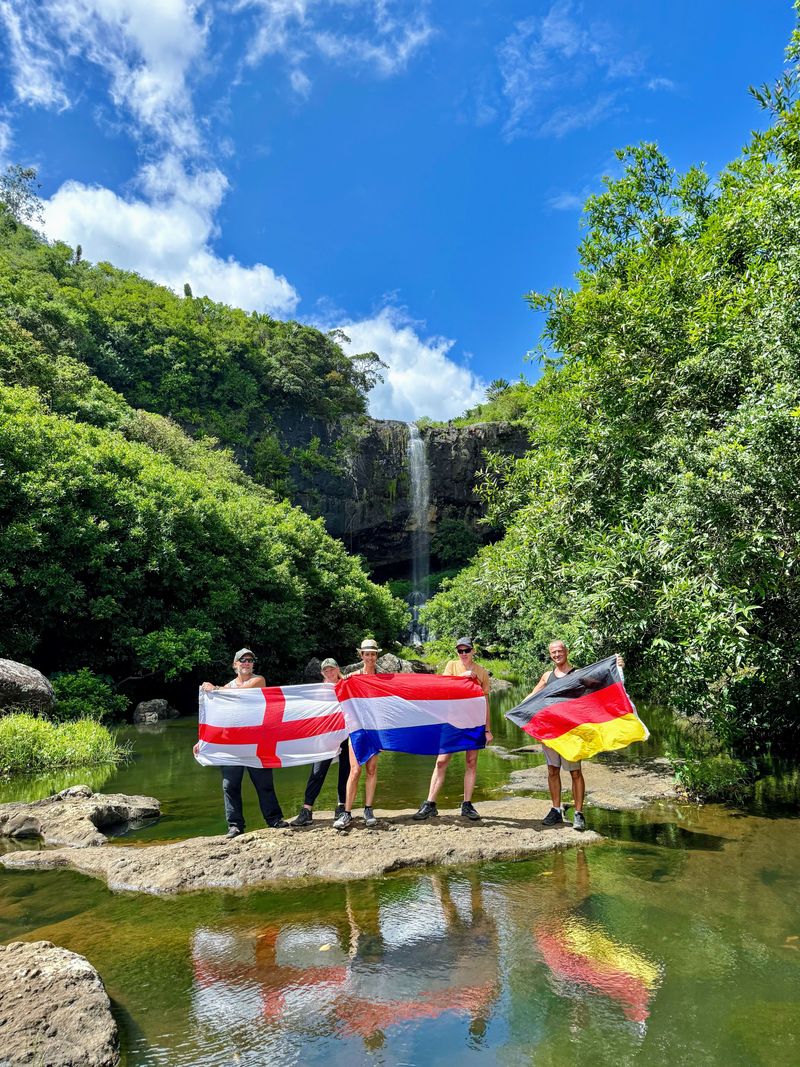
Day 7: Rest, Swim, and Snorkeling
A deliberate rest day. Mon Choisy is the best beach on the north coast. Spend the morning in the water, have lunch at one of the local snacks along the beach, and do nothing particularly purposeful in the afternoon.
This is also a good day to sort practicalities for the second week: any laundry, cash from an ATM in Grand Baie, and a look at the weather forecast.
Week Two: The East and The South
If possible, move your base south or east for the second week. Bel Ombre, Blue Bay and Belle Mare all make excellent bases for exploring the south and east coasts.
Day 8: Wild South Tour
This is the day most people remember longest. The south coast is the most authentic and least-visited part of Mauritius. Our Wild South Tour moves through the southern coast villages, past sugar cane factories, along rugged coastlines, to a secret cave, a Tamil temple, a rock pool, hidden waterfalls, and a deserted beach. Lunch is a traditional Mauritian spread at a local restaurant.
The south coast does not look like the Mauritius of travel brochures. It looks like the Mauritius that actually exists, and it is considerably more nature and adventure-focused.
Book the Wild South Tour here.

Day 9: Rest, Swim, and Snorkeling
A deliberate rest day. Belle Mare is the best beach on the east coast. Spend the morning in the water, have lunch at one of the local snacks along the beach, and do nothing particularly purposeful in the afternoon.
Day 10: Le Morne Hike and Le Morne Beach
If you only hike one mountain in Mauritius, make it this one. Le Morne Brabant is a UNESCO World Heritage site and the most iconic summit on the island. The climb is demanding, the views from the top are unforgettable, and the history of the mountain, a refuge for escaped enslaved people in the 18th century, gives the ascent a weight and significance that most mountains do not have.
Go with a guide. The route involves some scrambling on exposed rock and the final section requires confident footing. Trail shoes are essential.
After the hike, go for a dip in the ocean. Le Morne is the best beach on the west coast and one of the best on the island: a long, wide stretch of pale sand with calm water and good reef snorkelling.
Book the Le Morne Hike here.

Day 11: Chamarel and the Central Plateau
Drive up to Chamarel and visit the Ebony Forest Reserve, a conservation NGO in Mauritius dedicated to restoring native forests, protecting endemic biodiversity and promoting sustainable nature-based tourism, and have lunch at Palais de Barbizon restaurant, one of the best Creole dining experiences in Mauritius.
Day 12: 5 Islands Boat Tour
A full day on the water. The 5 Islands Boat Tour visits five offshore islands in the south-east lagoon, including Ile aux Aigrettes, a coral island nature reserve where the Mauritius Wildlife Foundation is restoring the ecosystem to its pre-human state, and Ile aux Fouquets, one of the most photogenic small islands in the Indian Ocean.
Fresh seafood is grilled on a private island for lunch. Swimming, snorkelling, and the kind of light on the water that makes everyone reach for their camera.
Book the 5 Islands Boat Tour here
Day 13: Mahebourg and the South East Coast
Mahebourg is the most historically significant town on the island and the most underrated. The waterfront promenade, the weekly market on Mondays, and the National History Museum (which covers the 1810 Battle of Grand Port, the only Napoleonic naval battle in which France defeated Britain) are all worth your time.
Spend the afternoon at Blue Bay, the most celebrated beach on the south coast and one of the best in the Indian Ocean. The marine park reef here is the healthiest coral system in Mauritius, and snorkelling is excellent in the shallow lagoon. Arrive before midday to get a spot under the casuarina trees.
Day 14: Last Day — East Coast and Departure
The east coast is the least-visited part of Mauritius by international tourists and arguably the most beautiful. Trou d'Eau Douce is a quiet fishing village with good seafood restaurants and the departure point for boats to Ile aux Cerfs.
Spend the morning on the beach. Have a final Mauritian lunch: octopus vindaye or a plate of mine frite at a local snack. Then drive to the airport, which sits on the south-east corner of the island and is well-positioned from the east coast.
!Pro Tip: Most flights out of Mauritius depart late at night, which means you have a full final day before check-in. Do not waste it in the airport lounge. The east coast is thirty minutes from the terminal.
Practical Notes for Two Weeks in Mauritius
Getting around: The most flexible option for two weeks is a hire car for at least part of the trip. Taxis work well for individual days and airport transfers. Our tours include pickup and drop-off, so no transport is needed on tour days. You can contact us for a car rental discount with Expressway Ltd.
Money: Withdraw cash at an MCB or SBM ATM using a fee-free card for the best exchange rate. Markets, street food, taxis, and beach vendors are all cash. Read our full Cash or Card in Mauritius guide here.
Packing: Trail shoes for hiking days, water shoes for the beach, reef-safe SPF 50, insect repellent, and one smart-casual dinner outfit. Read our full What to Pack for Mauritius guide here.
Health: No malaria tablets needed. Insect repellent is essential year-round. There is an active chikungunya outbreak in 2026. Read our full Mosquitoes and Health in Mauritius guide before you travel.
Frequently Asked Questions
Is two weeks enough time for Mauritius?
Two weeks is the ideal length for Mauritius. It is enough to cover all four coasts, do several days of hiking and water activities, eat well across the island, and still have rest days built in. One week feels rushed; two weeks feels right.
What is the best time of year to visit Mauritius for two weeks?
May to November is the dry season and the most reliable time to travel. The weather is warm, rain is rare, and conditions for hiking and water activities are at their best. Read our Best Time to Visit Mauritius guide here for the full seasonal picture.
Should I stay in one place or move around?
Moving your base once, from the north or west for the first week to the south or east for the second, reduces driving time and gives you a different experience of the island. More than two bases over two weeks tends to feel unsettled. One move is the right balance.
Do I need a hire car in Mauritius?
For two weeks, a hire car for at least part of the trip gives you significant flexibility. Taxis work well for days out and airport transfers. Our tours include pickup and drop-off, so no car is needed on tour days.
Can I do this itinerary independently without tours?
Most days yes. The tour days are marked because they involve access to places, people, and experiences that are difficult or impossible to replicate independently. The Wild South Tour, Wild North Tour, and canyoning day in particular involve local knowledge and logistics that would take significant time to arrange on your own.
More from the Mauritius Tours Blog
What to Pack for Mauritius: Your Complete Packing List — Everything to bring by season, including the health and protection essentials.
Cash or Card in Mauritius: Your Complete Money Guide — ATMs, exchange rates, tipping, and how much to bring.
What to Eat in Mauritius: The Local Food Guide — Where Mauritians actually eat, and how much it costs.
Where to Stay in Mauritius: A Seasonal Guide — The coast you stay on changes everything. Here is how to choose.
We are a Mauritian-based tour operator. Our guides are from the island and know it from the inside. Browse our full tour selection